


For those born in the latter half of the 1970s, for much of our lives, Republicans and the New Right seemed to be the driving force in American political and cultural life. Gerald Ford, Ronald Reagan, Bill Clinton (zing! Ok, not fair, but undoubtedly Clinton’s agenda was heavily influenced by Reaganite philosophies that even former members of the New Left felt obligated to adopt or engage) and both Bushes served as presidents for the vast majority of Generation Xers’ lives. It would be foolhardy to claim that it had no effect; my own understanding – and I suspect others born within a similar time frame – was colored by this experience. From birth to adulthood, America appeared to be center right, conventional, big business oriented, and increasingly privatized. Culturally, outside of L.A., NY, San Francisco, and a handful of other U.S. cities, America seemed more invested in conservatism than the avant garde or bohemianism.
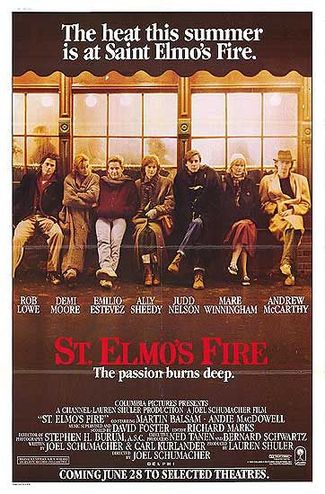
If one wanted to think about this more simply (like primate simply), consider popular culture. Children coming of age in the 1980s had St. Elmo’s Fire, Wall Street, Ordinary People, and The Breakfast Club. Adolescents and adults of the 1970s had Five Easy Pieces, Easy Rider (okay, not quite the 1970s but pretty damn close), Chinatown, and Breaking Away. So what happened? How did a country that appeared worried about endemic corruption (Chinatown) and viewed the promise of the American dream warily (Easy Rider/Five Easy Pieces) become a nation of navel gazing yuppies (St. Elmo’s Fire/Breakfast Club) that only occasionally deemed the actions of big business as nefarious (Wall Street)?
Nixon and Smoking Typewriters
Nixonland: it is the America where two separate and irreconcilable sets of apocalyptic fears coexist in the minds of two separate and irreconcilable groups of Americans … Nixonland is what happens when these two groups try to occupy a country together. By the end of the 1960s, Nixonland came to encompass the entire political culture of the United States. It would define it, in fact, for the next fifty years. (Rick Perlstein, Nixonland: The Rise of a President and the Fracturing of America, 46-47)
Modern day America, if one were to oversimplify, often seems split between those who watch Fox and those who watch MSNBC . I guess everybody else watches CNN or more likely just doesn’t pay attention. “The parties have reorganized themselves along ideological lines, as white conservatives have abandoned the Democrats and northern liberals the Republicans,” a recent Economist article observed. “The ideological factions have built mighty propaganda machines stretching from Washington think tanks to the studios of Fox and MSNBC. And ideologues have resorted to previously taboo weapons, such as the threat of default.” How we got here is the subject of Rick Perlstein’s Nixonland: The Rise of a President and the Fracturing of America.
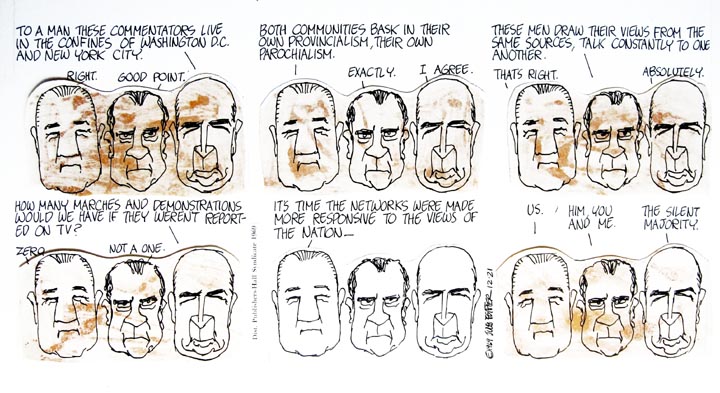
Perlstein portrays the late 1960s and early 1970s as a rapid fracturing of the American public. The Vietnam War, leftist and rightist radicalism, and a faltering economy combined to place strain on the very seams of public life. Though many writers highlight the violence of the extreme left like the Weatherman, Perlstein points out, far right extremists employed similar tactics just as frequently but the media reported on these events far less frequently. Perlstein illustrates how a chastened media felt compelled to represent America’s great middle classes more equally. When journalists critiqued Mayor Daley’s handling of the 1968 Democratic Convention, letters poured in chastising the media and praising the aggression of the Chicago Police Force. When in 1972 National Guardsmen shot dead four Kent State University students, citizens opposing the student protests provided their own response. “I extend appreciation and whole hearted support of the Guard of every state for their fine efforts in protecting citizens like me and our property,” wrote one. Another lamented “When is the long suffering Silent Majority going to rise up?” A local resident speaking to a researcher uttered a common feeling for many of the period. “Anyone who appears on the streets of a city like Kent with long hair, dirty clothes, or barefooted deserves to be shot,” related the Kent City citizen. (489) Letters and responses greatly circumscribed media coverage in the decades that followed. Nixon successfully exploited this hostility.

Of course, while the mainstream press seemed fixated on the antics of leftists, left leaning editors and writers in what became know as the Underground Press (UP) purposely sought to make waves. In Smoking Typewriters: The Sixties Underground Press and the Rise of Alternative Media in America, John McMillian explores the milieu of radical journalists and publishers of the period. McMillian tracks the initial emergence of radical newspapers like the Free Press (Los Angeles), the Rag (Austin, Texas), Berkeley Barb (take a guess) and the Paper (East Lansing, Michigan aka Michigan State), noting that in the very early stages each operated in isolation from one another, a symbol of the very uncoordinated leftism that emerged in the mid 1960s and early 1970s.

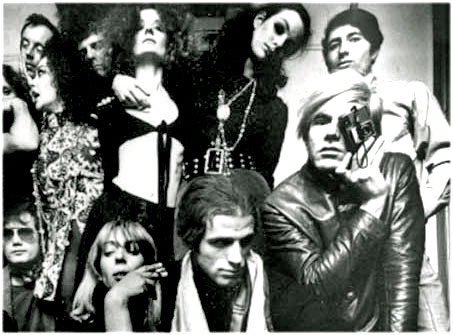
Though the journalistic practices of some UP writers remain questionable, they nonetheless highlighted aspects of protest that New York Times an others ignored or purposely obscured. Moreover, the UP projected a culture that united readers. “Underground newspapers functioned as vital institutional bases for radical political and aesthetic communities,” McMillian argues. “In their pages, they replicated the creativity, zaniness, humor – and otherworldliness – of the youth movement at large.” (81) Through their influence, the world of alternative weeklies developed soon after, often eschewing the kind of politics the UP celebrated but clearly shaped by the UP’s successes and failures. Without the UP, publications like the Chicago Reader probably would not exist.
Considering the level of paranoia that pervaded both the Left and the Right in the late 1960s and early 1970s, the UP’s radical take on political affairs had to rankle and frighten many a conservative. In all likelihood, the promotion of Marxism and bohemian lifestyles did little to ease the fears of the Silent Majority. The fact that many writers and UG editors professed a desire to shake things up only added to the tensions that had been mounting.
City Life
It is difficult to convey the intensity and confusion in our minds back then in the sixties and early seventies as we tried to reconcile two incompatible tendencies – a dandified belief in the avant-garde with a utopian New Left dedication to social justice, both of which in my case could be overruled by an admiration of the simple humanity of the Great Russians or Singer. Looking back now, I’d say that because we were Americans emerging from the stultifying 1950s, we were extraordinarily naïve about both politics and esthetics – humorless, unseasoned, dogmatic – because untested. (White, 38)
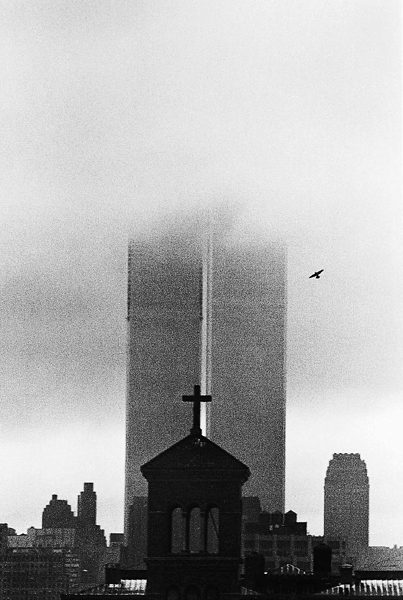
White’s memoir reveals the complexities of identity for those the Silent Majority deemed unworthy. White’s homosexuality would have clearly stigmatized him among the suburban masses that Nixon attempted to woo through naked patriotic tropes. “Not that concepts like ‘patriotism’ meant anything to me,” White recalls. “As a gay man I didn’t think that I was American or that I belonged to a society worth defending … I felt powerless to affect national policy, and I also knew that any policy might be devised by any government present or future would contain a clause condemning me as a homosexual.” (24) As White notes later, it was to the city they felt devoted, a city that nurtured the artistic creativity and sexuality of himself and others: “Perversely, we were proud to be New Yorkers but not Americans.” (211) As a native Midwesterner, White came from the very stock that made up the Silent Majority. However, despite his own origins, White claimed that Midwestern transplants like himself were the only ones who truly loved the city. As White recounts, 1970s, New York “was so shoddy, so dangerous, so black and Puerto Rican, that the rest of white America pulled up its skirts and ran off in the opposite direction.” (210) Ignoring White’s gendering, the longtime literary critic and author represents a central irony of the “Silent Majority”. Its dissidents, self perceived outcasts like White – whether due to sexuality, political beliefs, or other like factors – provided the very life blood to the nation’s symbol of urban decay. Throughout City Boy, White continually returns to this theme. For White, “no one loved New York except us, the gay and the artsy misfits from the Midwest.” (210)
If many Americans portrayed New York as a city of negative energy filled with malcontents, criminals, and angry minorities occupying public spaces White saw it differently. Clearly, White agrees with Perlstein’s assertions regarding violence. “Suburbia, television, and the automobile had isolated everyone – perhaps a good thing in such a potentially violent country.” (224) Still, also like Perlstein, White points to the kind of mindset that befell American suburbanites, people in gated communities “miles away from the nearest ghetto” so petrified they fortified their homes with weapons or karate training. In fact, despite White’s own proximity to the alleged urban trouble spots, “it was precisely in those places that were the safest that the sheltered populations most often expected imminent violence.” (224) To be fair, White himself acknowledges that simmering tensions in New York meant that by the late 1970s, the 1977 blackout revealed “how racially divided we were, how much anger seethed just below the surface, how rapacious and every man for himself we’d become.” (225). The larger point here is how fear and anger had pervaded the nation especially in places where violence and protest seemed a distant possibility.
Ryan Reft